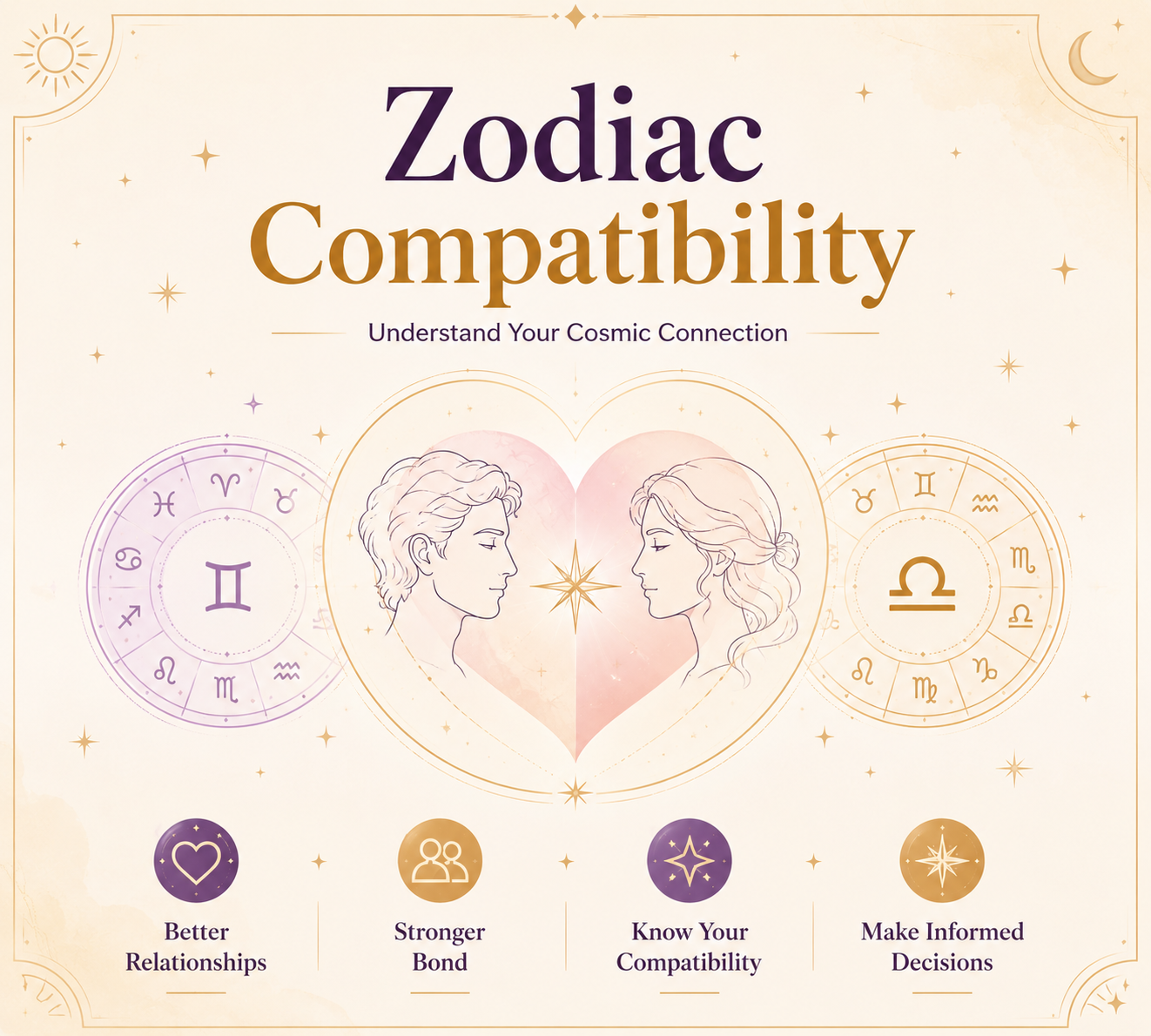
When people ask, “Are Aries and Scorpio compatible?” they are usually looking for a simple yes or no answer. However, traditional astrology does not categorize relationships into rigid boxes of success or failure. Instead, astrological compatibility—known as synastry—is a complex system of geometric angles, elemental combinations, and energetic pacing.
Comparing two sun signs is just scratching the surface. To truly understand how two people will interact, communicate, and resolve conflict, you have to look at the structural mechanics of the zodiac.
At its core, zodiac compatibility is governed by how the four elements (Fire, Earth, Air, Water) and the three modalities (Cardinal, Fixed, Mutable) interact with one another. By understanding these foundational building blocks, you can move past generic horoscopes and gain deep, practical insights into the mechanics of any relationship.
The Core of Compatibility: Astrological Elements
[INSERT IN-CONTENT IMAGE 1 HERE]
-
Image generation prompt: A beautiful, stylized conceptual graphic showing the four astrological elements blending together: a warm flame merging into a gentle breeze, and solid earth meeting ocean waves. Ethereal, modern digital art style with deep, rich colors.
-
Aspect ratio: 16:9 (1200x675px)
-
Alt text: An artistic representation of the four astrological elements—Fire, Earth, Air, and Water—interacting and blending.
The most fundamental layer of zodiac compatibility is elemental harmony. The 12 signs are divided into four elements: Fire, Earth, Air, and Water. These elements dictate a person’s basic temperament and emotional needs. When two people come together, their elements either nourish each other, boil over, or extinguish one another.
Harmonious Elements (The Easy Flow)
In astrology, elements that naturally support each other form harmonious geometric angles on the zodiac wheel (usually trines or sextiles). These pairings often experience an immediate sense of understanding and shared values.
-
Fire + Fire (Aries, Leo, Sagittarius): This pairing creates a massive bonfire. The relationship is passionate, high-energy, and adventurous. They inherently understand each other’s need for action and independence. However, they must be careful not to burn each other out with constant drama or competition.
-
Earth + Earth (Taurus, Virgo, Capricorn): This combination builds a solid foundation. They value stability, financial security, and practical reality. While it may lack explosive passion, it provides immense safety and long-term endurance.
-
Air + Air (Gemini, Libra, Aquarius): This is a meeting of the minds. Air signs connect through intellectual debate, shared ideals, and constant communication. They give each other the social freedom they crave, though they can sometimes struggle to ground the relationship in emotional depth.
-
Water + Water (Cancer, Scorpio, Pisces): This pairing forms a deep ocean. The emotional empathy and intuitive understanding are profound. They can communicate without speaking. The danger lies in becoming too insulated or drowning in each other’s fluctuating moods.
Complementary Elements (The Sparks of Growth)
Elements that are traditionally viewed as opposites often provide exactly what the other is missing.
-
Fire + Air: Air feeds Fire. Air signs provide the ideas, oxygen, and social framework that Fire signs need to burn brightly. In return, Fire gives Air the passion and momentum to act on their theories. This is a highly stimulating, dynamic combination.
-
Earth + Water: Water nourishes Earth. Water signs bring emotional depth, empathy, and intuitive care to the pragmatic Earth signs. Earth signs, in turn, provide a safe, solid container for Water’s shifting emotions to pool and settle. This is a deeply nurturing, fertile combination.
Challenging Elements (Friction and Work)
When elements do not naturally mix, the relationship requires more conscious effort to translate each other’s love languages. This friction creates geometric angles called squares and oppositions.
-
Fire + Water: Water extinguishes Fire, or Fire boils Water. Fire’s blunt, impulsive nature can easily hurt Water’s sensitive feelings. Conversely, Water’s need for emotional reassurance can feel suffocating to independent Fire. They must learn to respect completely different emotional speeds.
-
Earth + Air: A dust storm. Earth wants tangible results and established routines, while Air wants abstract theories and constant change. Earth may view Air as flaky or ungrounded, while Air may view Earth as stubborn or unimaginative. Success requires appreciating the other’s entirely different worldview.
The Role of Modalities in Relationships
[INSERT IN-CONTENT IMAGE 2 HERE]
-
Image generation prompt: A clean, educational infographic showing three interlocking gears. The first gear is labeled “Cardinal” (red tones), the second is “Fixed” (gold tones), and the third is “Mutable” (blue/green tones). Minimalist vector design on a dark background.
-
Aspect ratio: 4:3 (800x600px)
-
Alt text: An infographic of three interlocking gears representing the Cardinal, Fixed, and Mutable astrological modalities.
If elements dictate what two people care about, modalities dictate how they handle conflict, pacing, and daily life. The three modalities—Cardinal, Fixed, and Mutable—describe how a sign initiates action and deals with change.
Understanding modalities is the secret to resolving arguments. When couples clash, it is rarely because of their elemental values; it is usually because their modalities are out of sync.
Cardinal Dynamics (The Initiators)
-
Signs: Aries, Cancer, Libra, Capricorn
-
The Dynamic: Cardinal signs are natural leaders who want to push things forward. In a relationship, they are the ones who initiate the “Where is this going?” conversations, plan the dates, and tackle problems head-on.
-
The Conflict: If two Cardinal signs date, they can bump heads over who is in charge. They both want to steer the ship. To succeed, they must divide responsibilities rather than competing for dominance.
Fixed Dynamics (The Sustainers)
-
Signs: Taurus, Leo, Scorpio, Aquarius
-
The Dynamic: Fixed signs are the anchors. They prioritize loyalty, routine, and deep commitment. They do not give up easily, which makes them incredibly reliable partners.
-
The Conflict: Fixed signs are notoriously stubborn. When a Fixed sign pairs with another Fixed sign, arguments can result in massive stalemates where neither side will apologize or back down. They must actively practice compromise, or the relationship can become stagnant and inflexible.
Mutable Dynamics (The Adapters)
-
Signs: Gemini, Virgo, Sagittarius, Pisces
-
The Dynamic: Mutable signs are the chameleons. They are flexible, easygoing, and happy to go with the flow. They easily adapt to their partner’s lifestyle and rarely pick fights over small details.
-
The Conflict: When two Mutable signs are together, the relationship can lack a rudder. Because neither wants to be the absolute authority, they can struggle to make concrete plans, commit to major life changes, or establish firm boundaries. They need to consciously create structure.
Beyond the Sun Sign: Venus, Mars, and the Moon
While the sun sign (your core identity) is important, relationship astrology relies heavily on the inner planets. A couple might have incompatible sun signs but incredible synergy in the rest of their charts. To get a true picture of compatibility, astrologers look at three key planetary placements.
1. The Moon: Emotional Compatibility
Your moon sign dictates how you process emotions, what you need to feel safe, and your private, domestic self. If two people have harmonious moon signs, they will feel “at home” with one another, even if their outer personalities (sun signs) clash. Good moon compatibility means you soothe each other effectively during times of stress.
2. Venus: Love and Values
Venus is the planet of romance, aesthetics, and attraction. Your Venus sign reveals your love language—how you want to be romanced, what you find beautiful, and how you show affection. If your Venus aligns with your partner’s chart, the romantic chemistry flows effortlessly, and you likely share similar financial and aesthetic values.
3. Mars: Passion and Conflict
Mars governs drive, physical energy, sexual chemistry, and how you express anger. Mars compatibility is crucial for keeping the spark alive. It also dictates how a couple fights. If one person has a fiery, explosive Mars (like Aries) and the other has a passive-aggressive Mars (like Cancer), they will have to work very hard to find a fair fighting style.
The Myth of “Incompatible” Signs
It is a common misconception that certain zodiac pairings are “doomed” from the start. Astrologically speaking, there is no such thing as absolute incompatibility.
Harmonious charts (lots of trines and complementary elements) make a relationship easy, but “easy” can sometimes lead to boredom or a lack of personal growth. Challenging charts (lots of squares and clashing elements) require work, compromise, and friction. However, that exact friction is what forces individuals to evolve, expand their worldviews, and build deeply resilient partnerships.
The purpose of checking zodiac compatibility is not to find a reason to break up or to magically guarantee a soulmate. It is a diagnostic tool. By understanding the elemental and modal makeup of your relationship, you gain a clear map of your partner’s emotional landscape, allowing you to navigate differences with empathy, patience, and profound understanding.
📚 External References
-
The Astrological Association: A credible resource for understanding the historical transition of Hellenistic relationship analysis (synastry) into modern astrological practice. (https://www.astrologicalassociation.com/)
-
Encyclopedia Britannica – Astrology: For historical verification of how planetary aspects and geometric angles have traditionally been used to interpret human relationships. (https://www.britannica.com/topic/astrology)