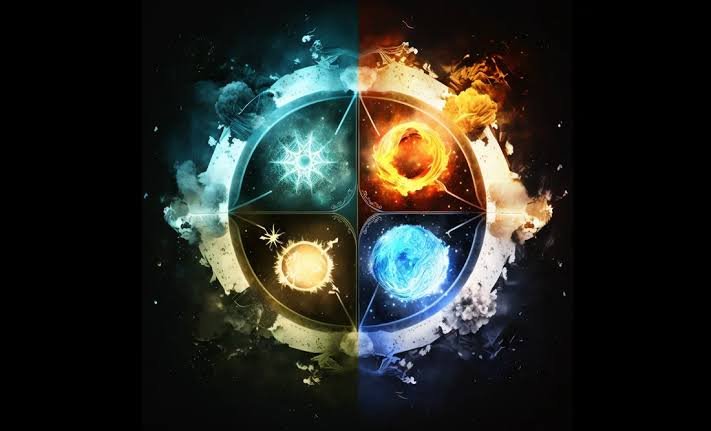
Long before modern psychology mapped the complexities of human personality, ancient civilizations looked to the natural world to understand themselves. The four elements—Fire, Earth, Air, and Water—form the foundational architecture of Western astrology. They are not just symbolic shorthand for personality traits; they are ancient philosophical concepts that describe how energy manifests in the physical and spiritual realms. By understanding the historical roots and traditional interpretations of these elements, we can unlock a deeper, more nuanced view of the zodiac and how these ancient archetypes continue to influence our daily lives.
The Historical Roots of the Four Elements
The concept of the four elements did not begin with astrologers; it began with early philosophers trying to explain the composition of the universe. In the 5th century BCE, the Greek philosopher Empedocles proposed that all matter was composed of four indestructible “roots”: fire, earth, air, and water. He believed that the interplay of these roots, driven by the cosmic forces of love (attraction) and strife (separation), created everything in existence.
Later, Aristotle expanded on this theory by assigning specific physical qualities to each element. He categorized them based on temperature and moisture:
-
Fire: Hot and Dry
-
Air: Hot and Wet (Fluid)
-
Water: Cold and Wet
-
Earth: Cold and Dry
When Hellenistic astrology began to take shape around the 2nd century BCE, scholars integrated this philosophical framework into the zodiac. The twelve signs were divided into four elemental triplicities, with each group of three signs sharing a fundamental nature. This categorization provided a reliable system for astrologers to assess a person’s temperament, physical vitality, and psychological inclinations.
Fire: The Spark of Creation (Aries, Leo, Sagittarius)
Fire is the element of pure, unbridled energy. In ancient traditions, fire was seen as the divine spark that brought light, warmth, and life to the world. It is associated with the spirit, intuition, and the forward momentum of creation.
-
Aries (Cardinal Fire): Represents the initial spark. Traditional astrology views Aries as the warrior and the pioneer, embodying the raw, impulsive energy required to start a new cycle.
-
Leo (Fixed Fire): Represents the sustained flame. Ancient astrologers associated Leo with the Sun, the center of our solar system, symbolizing royalty, consistency, and the warming glow of leadership and creativity.
-
Sagittarius (Mutable Fire): Represents the spreading wildfire. This sign takes the energy of fire and disperses it outward through exploration, philosophy, and the pursuit of higher truth.
Traditionally, individuals with a strong emphasis on Fire in their birth charts were described as possessing a “choleric” temperament. They are driven by enthusiasm, courage, and a desire to impose their will on the world. However, ancient texts also warned that unchecked Fire could lead to burnout, arrogance, and destructive impulsivity.
Earth: The Anchor of Reality (Taurus, Virgo, Capricorn)
While Fire initiates, Earth stabilizes. The Earth element is deeply connected to the material realm, the physical body, and the tangible results of our labor. Historically, agrarian societies revered the earth as the ultimate provider and sustainer of life, demanding respect, patience, and hard work.
-
Taurus (Fixed Earth): Represents the fertile soil. Taurus is focused on accumulation, sensory pleasure, and establishing deep, unshakeable roots. It is the builder of the zodiac.
-
Virgo (Mutable Earth): Represents the harvest. Traditional interpretations highlight Virgo’s role in refining, analyzing, and organizing material resources to ensure survival and efficiency.
-
Capricorn (Cardinal Earth): Represents the mountain peak. Capricorn directs earthly energy toward ambition, structure, and the establishment of societal laws and institutions.
The traditional temperament associated with Earth is “melancholic.” This does not necessarily mean sad, but rather serious, contemplative, and pragmatic. Earth signs are the realists of the zodiac. They possess the endurance to build lasting structures, though they must guard against becoming overly rigid, materialistic, or stubbornly resistant to change.
Air: The Breath of Intellect (Gemini, Libra, Aquarius)
Air is the most ethereal of the elements, governing the realm of the mind, communication, and social interaction. In ancient philosophy, the “pneuma” or breath was considered the vehicle of the soul and the medium through which divine intelligence flowed. Air connects us, carrying sound, ideas, and shared breath.
-
Gemini (Mutable Air): Represents the changing winds. Gemini gathers and disperses information rapidly, acting as the messenger and the eternal student of the zodiac.
-
Libra (Cardinal Air): Represents the balancing breeze. Libra uses intellectual energy to forge partnerships, negotiate peace, and create social equilibrium and aesthetic beauty.
-
Aquarius (Fixed Air): Represents the atmospheric pressure. Aquarius consolidates ideas into overarching theories and social systems, focusing on collective progress and humanitarian ideals.
Air signs are associated with the “sanguine” temperament—social, communicative, and intellectually driven. They thrive on exchanging concepts and building networks. The traditional challenge for Air is maintaining focus; without the grounding of Earth or the passion of Fire, Air can become detached, overly analytical, or scattered in the clouds of theory.
Water: The Depths of Emotion (Cancer, Scorpio, Pisces)
Water is the element of the subconscious, memory, and profound emotional connection. Ancient cultures viewed water as a purifying force and a gateway to the spirit world. It is formless, adapting to whatever container it is placed in, yet powerful enough to carve through solid rock over time.
-
Cancer (Cardinal Water): Represents the rushing spring. Cancer initiates emotional bonds and is deeply tied to the home, ancestry, and the protective instincts of motherhood.
-
Scorpio (Fixed Water): Represents the deep, still lake (or ice). Scorpio consolidates emotional energy into intense focus, exploring the hidden, taboo, and transformative aspects of the human psyche.
-
Pisces (Mutable Water): Represents the boundless ocean. Pisces dissolves boundaries, representing spiritual empathy, collective consciousness, and the space where the physical and spiritual worlds merge.
Associated with the “phlegmatic” temperament, Water signs are highly intuitive, empathetic, and sensitive to the unseen currents of their environment. They possess a profound capacity for healing and artistic expression. However, ancient astrologers noted that an excess of Water could lead to emotional overwhelm, escapism, or becoming lost in the undertow of other people’s problems.
Elemental Interactions and Chart Balances
In traditional astrological practice, isolating a single element rarely tells the whole story. The true art of astrology lies in observing how these elements interact within a birth chart.
-
Harmonious Elements: Fire and Air are considered active, masculine, and diurnal (day-oriented). They feed each other—Air provides the oxygen that allows Fire to burn brighter. Earth and Water are passive, feminine, and nocturnal (night-oriented). Water nourves the Earth, allowing life to grow.
-
Challenging Elements: Fire and Water create steam; their interaction can be highly emotional and volatile, leading to dramatic psychological shifts. Earth and Air often struggle to connect, as the practical demands of Earth can feel suffocating to the intellectual freedom of Air, like a dust storm clouding vision.
Astrologers also look for elemental imbalances. A chart entirely devoid of Water might indicate a person who struggles to process deep emotions, relying too heavily on logic or action. Conversely, a chart overly dominant in Fire might suggest someone who rushes into situations without considering the practical consequences (a lack of Earth).
Frequently Asked Questions (FAQs)
How do I find out my dominant element? Your dominant element is calculated by looking at your entire birth chart, not just your Sun sign. Astrologers tally the elements of your Sun, Moon, Rising sign (Ascendant), and the placements of all the inner and outer planets. The element that appears most frequently often dictates your overall energetic temperament.
Can you be compatible with someone whose element opposes yours? Yes. While elements of the same polarity (Fire/Air or Earth/Water) often find it easier to understand one another, opposing elements can offer profound growth. For example, an Earth-dominant person can help ground a Fire-dominant person, while the Fire person injects passion and spontaneity into the Earth person’s life.
Did the interpretation of the elements change over time? While the core symbolism has remained largely consistent since the Hellenistic period, modern psychological astrology has shifted the focus. Ancient astrologers used the elements largely for medical and predictive purposes (assessing physical humors and fate), whereas modern astrologers use them primarily as a framework for understanding psychological needs, communication styles, and personal growth.
What happens if a birth chart is missing an element? Having a “void” in an element does not mean you lack those traits entirely; rather, it indicates an area of life where you might have to work harder to find balance. Often, individuals subconsciously attract partners or friends who possess the missing element, or they overcompensate by striving relentlessly to master the qualities of that absent element.
The four elements are far more than archaic symbols; they are a timeless language used to decode human nature. By viewing our lives through the lenses of Fire’s passion, Earth’s pragmatism, Air’s intellect, and Water’s intuition, we gain a practical framework for self-discovery. Recognizing which elements dominate our nature—and which ones we need to cultivate—allows us to navigate our relationships, careers, and personal growth with greater intention and harmony.