
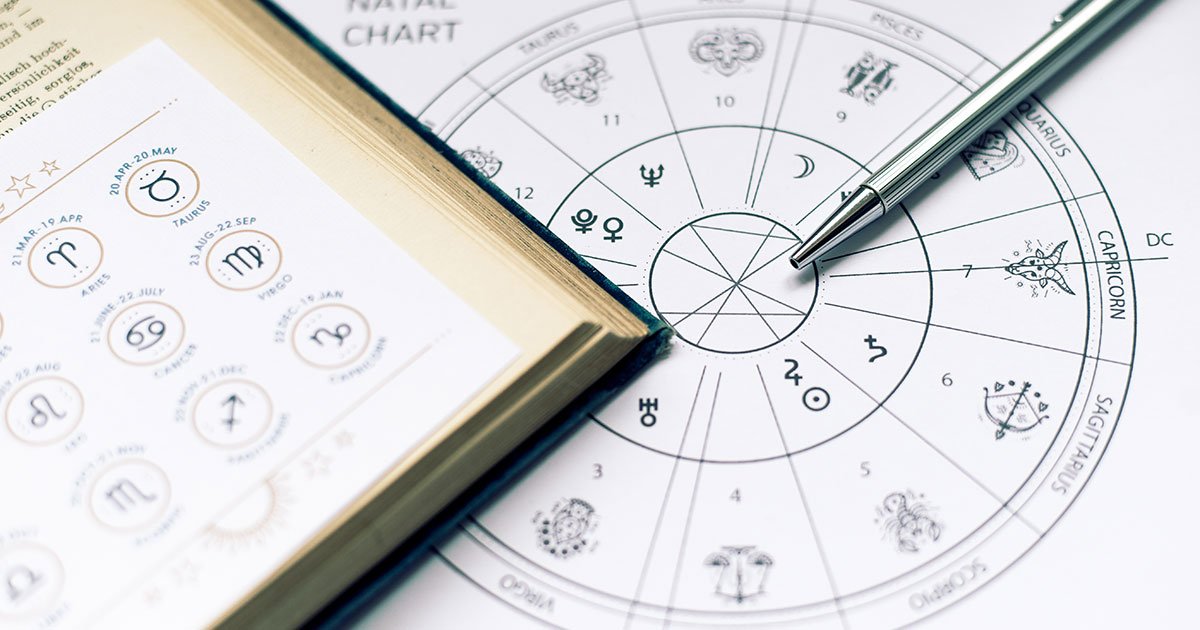
If you search the internet for zodiac sign dates, you will quickly notice a confusing problem. One website might say Taurus begins on April 20. Another might claim it starts on April 21. If your birthday falls on one of these transition days, you might spend your whole life wondering which sign you truly belong to.
This transition period is often called the “cusp.” Being born on a cusp simply means your birthday falls on the first or last day of a zodiac sign’s typical date range.
However, you do not actually have two sun signs. The exact date the sun changes signs shifts slightly every single year. Therefore, to understand your true zodiac sign, you must understand the astronomy behind astrology.
In this guide, we will explain exactly why zodiac dates change, how leap years affect astrology, and how you can find your definitive sun sign.
The Standard Zodiac Sign Dates
Before we explain why the dates change, it helps to know the general baseline. In Western Tropical astrology, the signs follow a standard calendar. These dates are generally accurate for most years, but they are not absolute rules.
Here is the standard list of zodiac dates:
-
Aries: March 21 – April 19
-
Taurus: April 20 – May 20
-
Gemini: May 21 – June 20
-
Cancer: June 21 – July 22
-
Leo: July 23 – August 22
-
Virgo: August 23 – September 22
-
Libra: September 23 – October 22
-
Scorpio: October 23 – November 21
-
Sagittarius: November 22 – December 21
-
Capricorn: December 22 – January 19
-
Aquarius: January 20 – February 18
-
Pisces: February 19 – March 20
If you were born exactly in the middle of these ranges, your sun sign is clear. However, if you were born on the very first or last day, your sign depends entirely on the specific year and time of your birth.
Why Do Zodiac Dates Change Every Year?
The shift in zodiac dates is not a mistake or a disagreement among astrologers. It is a mathematical reality based on how the Earth moves around the Sun. There are three main reasons why zodiac transition dates change from year to year.
The Earth’s Orbit is Not Exactly 365 Days
Our modern calendar assumes a year is exactly 365 days long. However, it takes the Earth roughly 365 days, 5 hours, 48 minutes, and 46 seconds to complete one full orbit around the Sun.
Because astrology tracks the exact apparent position of the Sun from our view on Earth, this extra quarter of a day matters. Each year, the exact moment the Sun enters a new zodiac sign happens about six hours later than it did the previous year.
The Impact of Leap Years
To fix the fact that our orbit is 365.24 days long, we add a Leap Year every four years. We insert February 29th into the calendar to catch up.
This calendar correction creates a sudden shift in astrological dates. Because we pull the calendar back by a full day, the sun enters the zodiac signs a bit earlier in a leap year. Over a four-year cycle, the start date for any zodiac sign can bounce back and forth between two different days.
Time Zones Matter
The Sun enters a new zodiac sign at one exact moment in time across the entire universe. However, because of time zones, that single moment falls on different dates depending on where you live.
For example, imagine the Sun enters Aries on March 20 at 10:00 PM in New York. For a person born in New York, the transition happens on March 20. But for someone born in London at that exact same moment, the local time is 3:00 AM on March 21. Even though they were born at the same second, their birth certificates show different dates. Therefore, location is a critical factor when determining cusp signs.
What Is a Zodiac Cusp?
In popular culture, people born on the transition days often say they are “on the cusp.” Some people believe this gives them a blend of both signs. For example, someone born on April 19 might feel they have the bold fire of Aries mixed with the steady earth of Taurus.
Psychologically, this makes sense. However, technically speaking, the Sun cannot be in two places at once.
Can You Have Two Sun Signs?
No, you cannot have two sun signs. The boundaries between zodiac signs in a birth chart are exact mathematical lines.
Think of a zodiac sign like a room in a house. You can stand right next to the doorway. You can lean against the frame. But ultimately, you are either in one room or the other. At the exact minute of your birth, the Sun was mathematically positioned in only one of the 12 signs.
If you feel like you have traits from both signs, there is usually a different astrological reason. Often, Mercury or Venus (which travel closely to the Sun) are located in the neighboring sign. For instance, you might be a pure Aries Sun, but you have a Taurus Mercury. This blend of planets creates that mixed “cusp” feeling.
How to Find Your True Zodiac Sign
If your birthday falls on a transition date, generic magazine horoscopes will never give you a clear answer. You cannot rely on a simple date range. Instead, you need to calculate your exact natal chart.
To find your true sun sign, you need three pieces of information:
-
Your exact date of birth.
-
Your exact time of birth. (Check your long-form birth certificate for the precise minute).
-
Your city of birth. (This determines the correct time zone).
Once you have this data, you can use any free online birth chart calculator. The software will calculate the exact degree of the Sun at the exact minute you were born. It will finally tell you which side of the line the Sun was on.
Finding Certainty in Your Astrological Chart
Astrology is a highly precise system based on mathematics, geometry, and time. While standard date lists are helpful for general knowledge, they cannot account for leap years, shifting orbits, and global time zones.
If you have always felt confused about being a “cusp baby,” finding your exact birth time will solve the mystery once and for all. By casting a full birth chart, you will discover your true sun sign, and you will unlock a much deeper understanding of your entire astrological profile.
📚 External References
-
NASA Space Place – How Long is a Year?: A great scientific resource explaining the exact length of Earth’s orbit and why leap years exist. (https://spaceplace.nasa.gov/years-on-other-planets/en/)
-
The Royal Observatory, Greenwich: Useful for explaining time zones and how global timekeeping impacts astronomical observations. (https://www.rmg.co.uk/royal-observatory)